

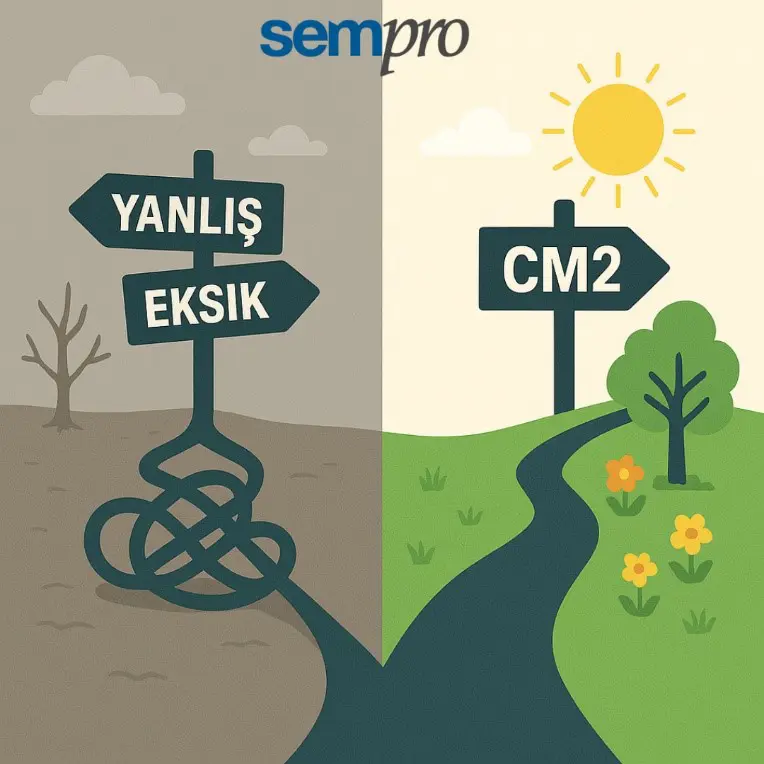
What Goes Wrong in Requirements Management—and Why It Matters
This week, we’re highlighting the top three mistakes commonly made in requirements definition and how the CM2 methodology helps prevent them.
- An effective requirements management process ensures that all requirements are defined clear, concise, and valid.
- Poorly defined processes and requirements lead to errors and financial losses in projects.
The 3 Most Common Mistakes:
- Requirements written in an unclear or ambiguous way.
- Failure to link requirements and maintain traceability.
- Not assessing the impact of changes on requirements and limiting impact analysis to the product only.

Success begins with defining requirements clearly and linking them properly.
Many teams face problems because they start with unclear or incorrect requirements and don’t keep them updated.
✔ These mistakes reduce product and process quality, increase corrective actions and the need for intervention resources, and consequently lead to higher costs.
✔ CM2 provides a clear and structured way to solve these problems.
✔ The CM2 methodology ensures the definition of clear, concise and valid requirements, establishes proper relationships and traceability, and minimizes potential risks.
✔ With CM2, change processes becomes faster, the impact of changes on requirements is properly assessed during impact analysis, and data integrity is maintained.

CM2 enables effective requirements management and prevents losses in workforce, materials, and time.
